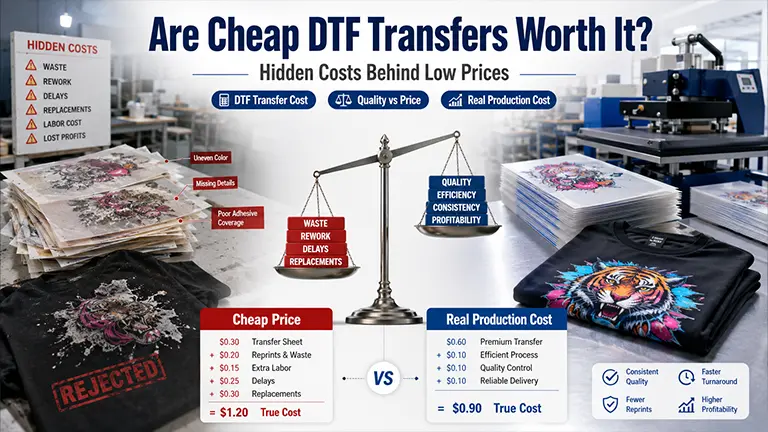
Дешёвые DTF-трансферы могут стоить покупки, если они правильно наносятся, приходят вовремя и остаются стабильными в повторных заказах. Сама по себе низкая цена — не проблема. Риск возникает, когда поставщиков сравнивают по цене за метр, игнорируя непригодные трансферы, испорченные изделия, переделки, стоимость замены доставки и жалобы клиентов.
Лучший вопрос не «какой поставщик самый дешёвый?», а:
Какой поставщик даёт нам самую низкую предсказуемую стоимость за продаваемое изделие?
Прайсовая цена — лишь отправная точка
Поставщики DTF могут считать по макету, квадратному метру, погонному метру или фиксированному листу-ганг-шиту. Перед сравнением предложений уточните ширину печати, минимальную оплачиваемую длину, неиспользуемую площадь листа, сборы за макет, срочность и доставку.
Сначала нормализуйте предложение:
Заявленная стоимость печати за квадратный метр = плата за печать ÷ закупленная печатная площадь
Затем посчитайте то, что действительно важно:
Истинная стоимость DTF-трансфера за продаваемое изделие = все соответствующие затраты на заказ и брак ÷ произведённые продаваемые изделия
Американское общество качества (ASQ) делит затраты на качество на предупреждение, оценку, внутренний и внешний брак. Для печатной мастерской это тестирование поставщика и входной контроль, а также брак, переделки, возвраты и рекламации.
Пять скрытых затрат дешёвых DTF-трансферов
1. Непригодные трансферы и испорченные изделия
Белые ореолы, полосы (banding), пропавшие детали, неровные сплошные цвета или неполное покрытие клеем могут сделать трансфер непригодным. Однако эти симптомы могут зависеть и от исходного макета, настроек термопресса, ткани, хранения или техники оператора. Фиксируйте предполагаемую причину, а не списывайте каждую неудачу на поставщика.
Осматривайте трансферы до нанесения. Забракованный лист дешевле испорченного изделия.
2. Переделки и время оператора
Трансфер, требующий повторного нанесения или импровизированных настроек, увеличивает труд и вариативность процесса. Учитывайте время на осмотр, поиск причин, повторное нанесение, перевыпуск изделия и общение с поставщиком.
3. Доставка и восстановление сроков
«Производство в тот же день» не означает доставку в тот же день. Фиксируйте, когда макет принят, когда производство завершено, когда перевозчик получил посылку и когда она пришла.
Бесплатная перепечать может оказаться дорогой, если она приходит после дедлайна клиента и заставляет платить за срочную доставку, сверхурочные или возврат.
4. Нестабильность цвета и партий
Один образец может выглядеть хорошо, а позже заказ смещается настолько, что это важно для униформы, брендовых цветов или постоянных клиентов. Сравнивайте партии по одному контрольному макету, изделию, настройкам пресса и освещению.
Спросите поставщика, какое цветовое пространство и профиль файла он рекомендует и уведомляет ли клиентов об изменениях плёнки, чернил, порошка или инструкций по нанесению.
5. Проблемы со стойкостью, выявленные клиентами
«Стираемый» — не полезное заявление без указания условий. Официальный стандарт ISO 105-C06:2010 описывает контролируемые методы оценки устойчивости цвета текстиля к домашней и коммерческой стирке. Это не DTF-сертификация, но он показывает, почему важны моющее средство, температура, механическое воздействие и метод теста.
Небольшая мастерская может создать повторяемый внутренний тест, фиксируя изделие, партию трансферов, настройки нанесения, цикл стирки, моющее средство, температуру и режим сушки. Сохраняйте нестиранный контрольный образец и проверяйте более одного изделия. Не делайте заявление о количестве стирок по одному образцу.
Как рассчитать реальную стоимость DTF-трансфера
Для каждого заказа фиксируйте эти поля:
| Статья затрат | Что включить |
|---|---|
| Закупка | Трансферы, листы-ганг-шиты, сборы за наладку и макет |
| Доставка | Доставка, упаковка, срочное обслуживание и применимые пошлины |
| Внутренний брак | Забракованные трансферы, испорченные заготовки и труд на переделки |
| Внешний брак | Возвраты, перевыпуск, замена доставки и обработка жалоб |
| Сроки | Сверхурочные или задокументированные затраты на срочность из-за задержек |
Также отслеживайте два операционных показателя:
Входной выход годных = пригодные трансферы до нанесения ÷ полученные трансферы × 100
Выход годных при первой попытке = продаваемые изделия без переделок ÷ обработанные изделия × 100
Используйте фактические данные и не присваивайте произвольную денежную ценность «репутации». Считайте измеримые возвраты, отменённые заказы, затраты на замену и время персонала.
Когда дешёвые DTF-трансферы оправданны
Более дешёвые трансферы могут быть разумным выбором, когда:
- поставщик прошёл как минимум два контролируемых пробных заказа;
- качество и выход годных при первой попытке остаются стабильными;
- макеты стандартизированы и готовы к производству;
- сроки допускают разумное время доставки;
- даны письменные инструкции по нанесению и съёму;
- политика перепечати ясна;
- экономия сохраняется после доставки, осмотра, брака и переделок;
- у вашей мастерской есть резерв для срочных заказов.
Ценовая конкуренция может быть выгодна покупателям. Цель — проверить, что входит в цену и повторяем ли результат.
Когда самая низкая цена несёт больше риска
Давайте надёжности больший вес, когда заготовка изделия дорога, у заказа фиксированная дата события, важны мелкие детали, брендовые цвета должны оставаться стабильными или замена доставки была бы дорогой.
В таких случаях небольшая экономия на трансфере может не компенсировать одно испорченное изделие или сорванный срок. Опирайтесь на собственные данные, а не на универсальное правило.
Как протестировать недорогого поставщика DTF
- Сделайте один контрольный файл с мелким текстом, сплошными цветами, градиентами, нейтральными тонами и прозрачными краями.
- Закажите несколько копий и проверьте совмещение, детали, покрытие клеем и состояние плёнки.
- Следуйте задокументированным инструкциям поставщика по температуре, времени, давлению, съёму и постобработке.
- Проверьте хлопок, полиэстер, смесовые ткани или рабочую одежду, которые представляют ваши реальные заказы.
- Проведите контролируемый тест стирки и сохраните нестиранный образец.
- Позже разместите второй заказ, чтобы проверить стабильность партий.
- Зафиксируйте, как поставщик отвечает на технические вопросы и обрабатывает задокументированную рекламацию.
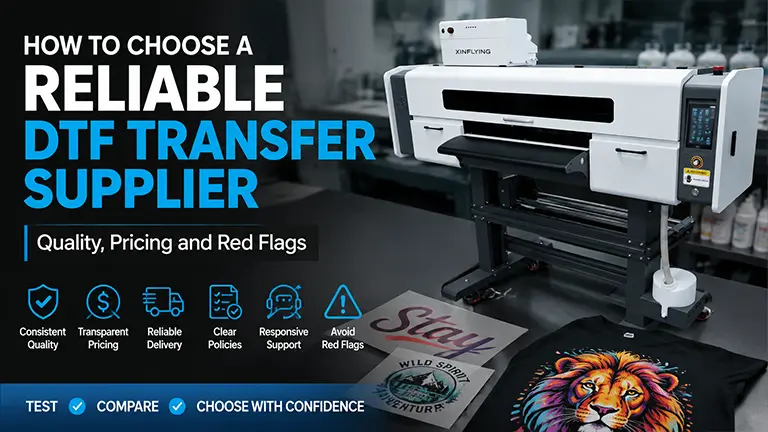
Более широкий чек-лист квалификации см. в нашем руководстве по выбору надёжного поставщика DTF-трансферов.
Тревожные признаки дешёвых DTF-трансферов
Проверяйте детальнее, если:
- заявленная цена не указывает ширину листа или единицу биллинга;
- доставка и обязательные сборы появляются только при оформлении заказа;
- инструкции для пресса отсутствуют или противоречивы;
- пробные заказы не поощряются;
- заявления о стойкости не имеют условий теста;
- сроки не разделяют производство и доставку;
- ответственность за макет неясна;
- политику перепечати трудно найти;
- оптовый заказ поощряется до повторных тестов.
Один тревожный признак не доказывает низкое качество. Несколько нерешённых признаков делают кажущуюся экономию менее предсказуемой.
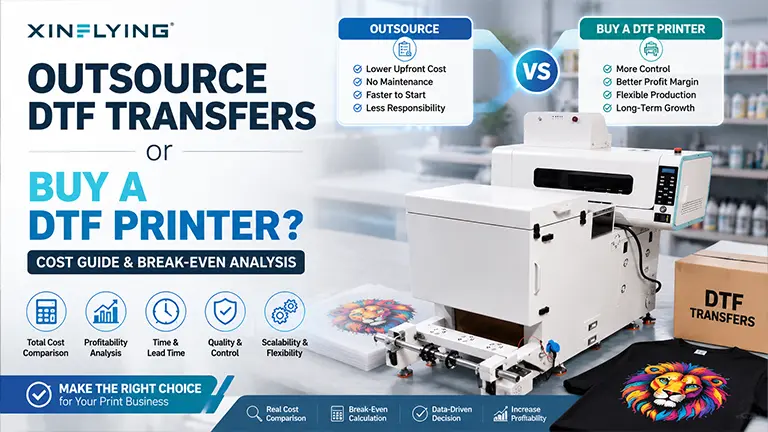
Когда стоит сравнить аутсорс с собственной печатью?
Аутсорс часто остаётся практичным при нерегулярном объёме, ограниченном месте или отсутствии сотрудника, способного взять на себя производство и обслуживание. Собственная печать DTF не автоматически дешевле. Оборудование, расходники, труд, коммуналка, вентиляция, обслуживание, брак, обучение и простои — всё входит в сравнение.
Оценивайте собственное производство, когда месячный спрос стабилен, затраты на доставку и срочность повторяются, сроки поставщика ограничивают заказы, а больший контроль графика имеет измеримую ценность.
Линейка DTF-принтеров XINFLYING включает:
| Модель | Заявленная ширина печати | Заявленная скорость |
|---|---|---|
| XF-450 Pro | До 420 мм | 5–9 м²/ч, в зависимости от режима проходов |
| XF-702E | До 600 мм | 5–10 м²/ч, в зависимости от режима проходов |
| XF-F808 | До 800 мм | 28 м²/ч в указанном 6-проходном режиме |
Заявленная скорость печати — это не пропускная способность по готовым изделиям. Макет, отверждение, обращение с порошком, рабочий процесс оператора, обслуживание и мощность термопресса влияют на фактический выход.
XINFLYING также публикует гарантийную и послепродажную политику, включая предотгрузочную проверку, стандартную ограниченную гарантию 12 месяцев для соответствующего оборудования, если иное не указано в письменных условиях, удалённую техподдержку и помощь с запчастями. Перед покупкой ознакомьтесь с исключениями и эксплуатационными обязанностями.
Если трансферы на аутсорсе остаются стабильными и экономичными после полного сравнения затрат, продолжайте передавать на аутсорс. Если повторяющиеся затраты на качество, доставку и график измеримы — и ваша мастерская операционно готова — сравните их с полным собственным рабочим процессом.
Итоговый вывод
Дешёвые DTF-трансферы оправданны, когда низкая цена проходит проверку в реальных условиях: трансферы пригодны, доставка предсказуема, инструкции ясны, а результаты остаются стабильными в повторных заказах.
Они не дешёвы, когда экономия растворяется в осмотре, переделках, испорченных заготовках, срочной перевозке, перевыпуске и восстановлении отношений с клиентом. Сравнивайте стоимость за продаваемое изделие, а не только цену за метр.
Часто задаваемые вопросы
Не обязательно. Цена сама по себе не определяет качество. Сравнивайте повторные заказы по стабильности печати, нанесению, стойкости к стирке, срокам и поддержке.
Разделите плату за печать на закупленную печатную площадь в квадратных метрах. Затем добавьте соответствующие сборы, доставку, брак и переделки, чтобы получить истинную стоимость за продаваемое изделие.
Один заказ не покажет стабильность партий. Проверьте повторные копии в первом заказе и разместите как минимум ещё один малорисковый заказ до передачи важной работы.
Оценивайте оборудование, когда спрос стабилен, затраты или задержки на аутсорсе повторяются, а у мастерской есть подходящее место, персонал, рабочий процесс и дисциплина обслуживания. Низкий или непредсказуемый объём может по-прежнему говорить в пользу аутсорса.