Выбор надёжного поставщика DTF-трансферов требует большего, чем сравнение цены за метр. Низкая цена трансфера — не экономия, если печать приходит с опозданием, создаёт белый ореол вокруг мелкого текста, искажает цвета клиента или портит изделие. Важна стоимость каждого пригодного трансфера, доставленного вовремя.
В обсуждении на Reddit среди владельцев термопрессового бизнеса пользователи описывали очень разный опыт с качеством, доставкой, долговечностью и поддержкой. Эти комментарии — частный опыт, а не результаты контролируемых тестов, но они показывают, какие вопросы печатники задают снова и снова.
Это руководство превращает эти опасения в практический процесс выбора поставщика.
Что делает поставщика DTF-трансферов надёжным?
Надёжный поставщик DTF-трансферов должен обеспечивать:
- стабильный результат более чем в одном заказе;
- чёткие инструкции по макету, термопрессу, съёму плёнки и постобработке;
- предсказуемые сроки производства и доставки;
- прозрачное ценообразование и доплаты;
- видимую политику перепечати и рекламаций;
- поддержку, помогающую отделить проблемы макета, нанесения и производства;
- образцы, которые можно испытать на тканях, которые вы реально продаёте.
Не выбирайте поставщика по одному привлекательному образцу. Проверьте весь рабочий процесс: отправку файла, цветопробу, производство, доставку, нанесение, стирку и решение проблем.
Начните с контролируемого пробного заказа
Случайные макеты клиентов затрудняют сравнение поставщиков. Сделайте один контрольный файл и отправляйте его каждому кандидату из шорт-листа.
Включите:
- мелкий прямой и обратный текст;
- тонкие линии и изолированные детали;
- сплошные цветовые блоки, на которых видны полосы (banding);
- градиенты, нейтральные серые и насыщенные цвета;
- прозрачные края;
- тот же макет в двух-трёх размерах;
- часто используемый цвет клиента, если важно совпадение цвета.
Используйте исходный производственный файл для каждого поставщика. Зафиксируйте, выявляет ли поставщик проблемы с разрешением, прозрачностью, размерами или цветовым профилем до печати.
Закажите несколько копий. Один трансфер может показать явный дефект, а повторные копии помогают оценить стабильность внутри заказа.
Осмотрите трансфер до нанесения
Изучите плёнку при постоянном освещении до того, как она попадёт на изделие.
| Что вы видите | Возможные факторы | Что спросить |
|---|---|---|
| Белый ореол по краям | Треппинг макета, подложка или совмещение | Может ли поставщик проверить исходный файл и воспроизвести проблему? |
| Горизонтальные полосы | Стабильность печати или проблема, связанная с соплами | Подлежит ли лист перепечати? |
| Пропавшие мелкие детали | Разрешение, укладка чернил или производственные ограничения | Какую минимальную деталь поставщик рекомендует? |
| Неожиданный сдвиг цвета | Профиль файла, управление цветом, изделие или условия пресса | Какое цветовое пространство и рабочий процесс использовать клиентам? |
| Неравномерный клей | Нанесение порошка, отверждение, хранение или обращение | Следует ли заменить трансфер? |
Не считайте, что каждая видимая проблема возникла по вине поставщика. Файл, плёнка, чернила, порошок, отверждение, хранение, термопресс, ткань и оператор — всё влияет на результат. Хороший поставщик должен помочь разобраться, а не сразу перекладывать вину.
Проверьте нанесение на реальных изделиях
Трансфер, нанесённый только на одну хлопковую футболку, не доказывает работоспособность на полиэстере, смесовых тканях, рабочей одежде или эластичных изделиях. Запросите письменные инструкции по нанесению и проверьте продукцию, которая представляет ваши обычные заказы.
Зафиксируйте:
- состав ткани и тип изделия;
- модель термопресса;
- температуру и проверенную температуру плиты, если доступно;
- время и способ создания давления;
- съём плёнки горячим, тёплым или холодным;
- процесс постобработки;
- результат сразу после нанесения.
Если трансфер не получился, меняйте по одной переменной. Одновременное изменение температуры, давления, времени и способа съёма затрудняет определение причины.
Используйте повторяемый тест стирки
«Стираемый» и «долговечный» — неопределённые термины без указания условий. Официальный стандарт ISO 105-C06:2010 описывает методы оценки устойчивости цвета текстиля к домашней и коммерческой стирке. Это не DTF-сертификация и не универсальный порог «годен/негоден», но он показывает, почему необходимо контролировать моющее средство, температуру, механическое воздействие и метод теста.
Небольшая мастерская может создать повторяемую внутреннюю методику:
- Нанесите одинаковые трансферы на задокументированные изделия.
- Сохраните один нестиранный контрольный образец.
- Используйте одну и ту же стиральную машину, моющее средство, температуру и режим сушки.
- Осматривайте через заданные интервалы, релевантные вашему обещанию клиенту.
- Фотографируйте одни и те же участки при одном освещении.
- Регистрируйте отдельно растрескивание, отрыв по краям, изменение цвета и износ поверхности.
Проверьте несколько образцов и повторите процесс, если поставщик меняет материалы или инструкции по нанесению. Не публикуйте заявление о количестве стирок по одной футболке.
Проверьте стабильность, сроки и поддержку
Разместите как минимум два малорисковых заказа в разное время, прежде чем передавать важную работу клиентов. Сравните цвет, мелкие детали, покрытие клеем, поведение при съёме, упаковку, время производства и реакцию поддержки.
Спросите поставщика:
- Когда начинается отсчёт производства?
- Сроки считаются в рабочих или календарных днях?
- «В тот же день» — это производство, забор перевозчиком или доставка?
- Как обрабатывается сезон пиковой нагрузки?
- Сообщается ли об изменениях материалов или инструкций для пресса?
- Какие доказательства и окно подачи требуются для рекламации?
- Как быстро производятся одобренные перепечати?
Локальный поставщик может предложить более быстрый самовывоз и экстренное восстановление. Онлайн-поставщик может предложить больше мощности и цены за объём. Ни один не надёжнее автоматически — применяйте к обоим одни и те же тесты.
Сравните стоимость за пригодный трансфер
Цена за квадратный или погонный метр — лишь отправная точка. Рассчитайте:
Стоимость пригодного трансфера = (плата за печать + сборы за макет + сборы за срочность + доставка + задокументированный брак и переделки) ÷ пригодные трансферы
Перед сравнением предложений уточните печатные размеры, минимальный биллинг, неиспользуемую площадь листа, объёмные тарифы, доставку и условия перепечати.
Отслеживайте два простых показателя:
Входной выход годных = пригодные трансферы до нанесения ÷ полученные трансферы × 100
Выход годных при первой попытке = продаваемые изделия без переделок ÷ обработанные изделия × 100
Более дешёвый поставщик может быть верным выбором, когда файлы стандартизированы, сроки гибки, а повторные тесты показывают стабильный выход годных. Более высокая цена может быть оправдана, если она снижает брак изделий, задержки или дорогостоящие перепечати.
Красные флаги поставщика DTF
Проверяйте детальнее, если:
- цена — единственное чётко описанное преимущество;
- инструкции для пресса отсутствуют или противоречивы;
- пробные заказы не поощряются;
- поставщик обещает идентичный результат на любой ткани;
- ответственность за макет неясна;
- сроки не разделяют производство и доставку;
- доставка и обязательные сборы появляются только при оформлении заказа;
- политику перепечати трудно найти;
- изменения материалов не доводятся;
- оптовый заказ поощряется до повторных тестов.
Один тревожный признак не доказывает ненадёжность поставщика. Несколько нерешённых признаков повышают операционный риск.
Используйте простую оценочную карточку поставщика
| Категория | Предлагаемый вес |
|---|---|
| Качество печати и нанесения | 30% |
| Стабильность от заказа к заказу | 20% |
| Сроки и доставка | 15% |
| Поддержка и обработка рекламаций | 15% |
| Фактическая стоимость с доставкой годных | 15% |
| Документация и прослеживаемость | 5% |
Настройте веса под свой бизнес. Событийная работа может требовать большего внимания к срокам, а брендовая униформа — к стабильности цвета.
Когда стоит рассмотреть печать собственными силами?
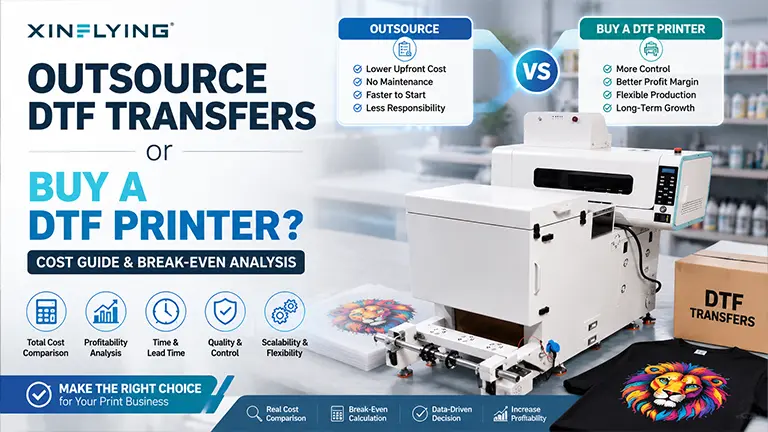
Передача на аутсорс остаётся практичным, когда объёмы нерегулярны, место ограничено или ни один сотрудник не может взять на себя производство и обслуживание. Покупка оборудования лишь ради избегания одного разочаровавшего поставщика может заменить проблему закупки на проблему эксплуатации.
Собственное производство стоит рассматривать, когда спрос стабилен, затраты на срочность и доставку повторяются, сроки поставщика ограничивают продажи, а больший контроль графика имеет измеримую ценность.
Линейка DTF-принтеров XINFLYING включает XF-450 Pro со скоростью 5–9 м²/ч в зависимости от режима проходов, XF-702E со скоростью 5–10 м²/ч и XF-F808 со скоростью 28 м²/ч в указанном 6-проходном режиме. Это заявленные скорости печати, а не гарантированная пропускная способность по готовым изделиям или прибыльность.
Перед вложением средств изучите полный рабочий процесс, требования к оператору и условия обслуживания. Гарантийная и послепродажная политика XINFLYING описывает предотгрузочную проверку, стандартную ограниченную гарантию 12 месяцев для соответствующего оборудования, если иное не указано в письменных условиях, удалённую поддержку, помощь с запчастями и применимые исключения.
Если квалифицированный поставщик по-прежнему даёт надёжный результат по приемлемой стоимости годных, продолжайте передавать на аутсорс. Если проблемы с качеством, сроками и контролем повторяются — и ваша мастерская готова вести рабочий процесс — сравните аутсорс с соответствующим собственным
Часто задаваемые вопросы
Проверьте контрольный файл на своих обычных тканях, следуйте задокументированным настройкам пресса, проведите повторяемый тест стирки, разместите более одного заказа и сравните выход годных, сроки, поддержку и обработку рекламаций.
Только если повторные тесты показывают приемлемое качество, доставку и поддержку. Сравнивайте фактическую стоимость с доставкой за пригодный трансфер, а не только заявленную цену.
Один заказ не покажет стабильность партии. Проверьте повторные копии в первом заказе и разместите как минимум ещё один малорисковый заказ до передачи важной работы клиентов.
Не автоматически. Локальные могут предложить самовывоз и более быстрые экстренные перепечати; онлайн-поставщики — больше мощности и цены за объём. Оценивайте обе категории по одной карточке.