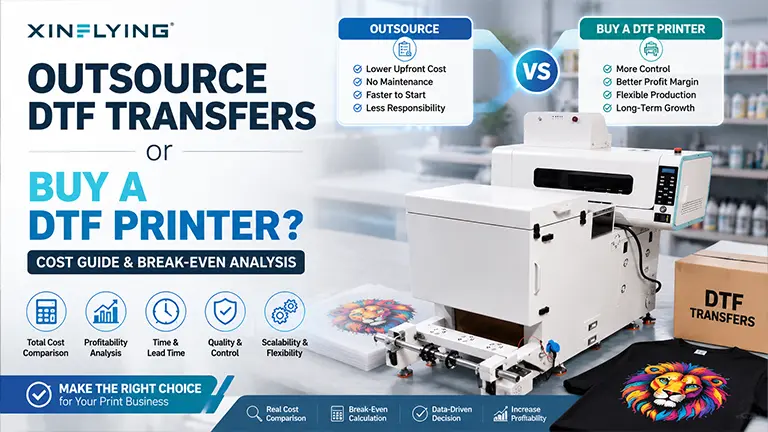
Покупка DTF-принтера не всегда выгоднее передачи трансферов на аутсорс. Собственное производство снижает сроки поставщика и даёт мастерской больший контроль над графиком, но добавляет оборудование, труд, обслуживание, расходники, брак и простои. Аутсорс держит фиксированные затраты и эксплуатационную ответственность ниже, хотя доставка, сборы за срочность и задержки поставщика дорожают с ростом объёма.
Правильный выбор зависит от вашего фактического месячного спроса на трансферы, а не от универсального порога заказа или обещанного срока окупаемости.
Краткое резюме решения
| Ситуация бизнеса | Вариант, который обычно стоит оценить первым |
|---|---|
| Новая мастерская с нерегулярными заказами | Аутсорс |
| Ограниченное место или нет обученного оператора | Аутсорс |
| Стабильный ежедневный спрос и повторяющиеся сборы за срочность | Сравнить обе модели |
| Частые образцы и изменения макета в последний момент | Собственное производство |
| Продажи трансферов в большом объёме | Собственное производство |
| Нет времени на обслуживание или ответственность за производство | Аутсорс |
Эта таблица — отправная точка, а не вывод о прибыльности. Используйте формулы ниже со своими данными.
Сравните полную месячную стоимость
Администистрация малого бизнеса США (SBA) рекомендует рассчитывать начальные расходы и точку безубыточности, чтобы составить полную финансовую картину и оценить, когда бизнес может выйти в плюс. Для производства DTF сравнивайте полные рабочие процессы при одинаковом объёме и требованиях к качеству.
Месячная стоимость аутсорса
Счета за трансферы + доставка + сборы за макет или срочность + задокументированные затраты на брак
Задокументированные затраты на брак могут включать забракованные трансферы, испорченные изделия, труд на переделки, стоимость замены доставки, возвраты и сверхурочные из-за задержек.
Месячная стоимость собственного производства
Платёж за оборудование или амортизация + расходники + труд + коммунальные услуги + обслуживание + отходы + затраты помещения и эксплуатации
Американское общество качества (ASQ) относит брак и переделки к внутренним затратам на несоответствие, а рекламации, возвраты и работы по гарантии — к внешним. Учитывайте эти затраты с обеих сторон сравнения, а не предполагайте, что любой из процессов даёт идеальный результат.
Рассчитайте экономию, окупаемость и объём безубыточности
Используйте одну последовательную единицу — например, квадратные метры, листы-ганг-шиты или трансферы.
Месячная эксплуатационная экономия = месячная стоимость аутсорса − месячная стоимость собственного производства
Если результат ноль или отрицательный, оборудование не создаёт эксплуатационной экономии при принятых допущениях.
Если экономия положительная:
Простой срок окупаемости = первоначальные вложения ÷ месячная эксплуатационная экономия
Простая окупаемость — это не прибыль, денежный поток или возврат на инвестиции. Она автоматически не учитывает финансирование, налоги, остаточную стоимость, изменения спроса или стоимость капитала. Обсуждайте крупные инвестиционные решения с бухгалтером или финансовым консультантом.
Также можно оценить производственный объём безубыточности:
Объём безубыточности = месячные постоянные затраты собственного производства ÷ (стоимость годных на аутсорсе за единицу − переменная стоимость собственного производства за единицу)
Эта формула работает только когда стоимость годных на аутсорсе выше переменной стоимости собственного производства. Используйте стоимость за пригодный результат, а не прайс-лист поставщика или только стоимость чернил.
Когда аутсорс DTF-трансферов выгоднее
Аутсорс часто подходит бизнесам, которые:
- имеют сезонный или непредсказуемый спрос на трансферы;
- хотят сохранить деньги на маркетинг, бланки или другое оборудование;
- не имеют подходящих питания, вентиляции, климат-контроля или производственного помещения;
- не могут выделить оператора на ежедневную печать и обслуживание;
- нужны разные форматы трансферов без владения несколькими рабочими процессами;
- могут получать стабильное качество и предсказуемую доставку от квалифицированного поставщика.
Для мастерской трафаретной печати аутсорс может быть способом с минимальными обязательствами принимать полноцветные короткие тиражи, персонализацию или макеты, неэффективные для сеток. Для нового POD-бизнеса он позволяет валидировать спрос до добавления постоянных затрат на оборудование.
Обратная сторона — меньше прямого контроля над очередями производства, изменениями материалов, срочными перепечатями и задержками перевозчика.
Когда покупка DTF-принтера выгоднее
Собственное производство стоит рассматривать, когда:
- объём трансферов стабилен и измерим;
- доставка и сборы за срочность повторяются каждый месяц;
- сроки поставщика ограничивают заказы, которые вы можете принять;
- образцы и правки макета вызывают повторяющиеся задержки;
- вы планируете продавать трансферы, а также декорировать изделия;
- более быстрый внутренний оборот имеет измеримую ценность для клиента;
- у бизнеса есть обученный оператор и дисциплина обслуживания;
- доступны место, вентиляция, питание, отверждение и мощность термопресса.
Для сложившихся трафаретных печатников DTF может дополнять, а не заменять трафаретную печать. Он может обрабатывать полноцветные короткие тиражи, имена и номера или быстрое изготовление образцов, тогда как трафаретная печать остаётся эффективной для подходящих крупных заказов.
Для POD-операций собственное производство сокращает путь от заказа до декорирования, но только если печать, нанесение порошка, отверждение, нанесение прессом, контроль качества и обслуживание надёжно укомплектованы.
Затраты, которые часто упускают в расчёте ROI DTF-принтера
| Статья затрат | Что включить |
|---|---|
| Полный рабочий процесс | Принтер, оборудование для нанесения порошка и отверждения, RIP-ПО, термопресс, очистка воздуха, аксессуары |
| Расходники | Плёнка, чернила, порошок, чистящие жидкости и упаковка |
| Труд | Подготовка файлов, печать, отверждение, нанесение прессом, контроль, очистка и устранение неполадок |
| Помещение | Площадь, электрика, заземление, вентиляция, контроль температуры и влажности |
| Обслуживание | Регулярная очистка, изнашиваемые детали, запчасти и время сервиса |
| Потеря качества | Пусковой брак, неудачные отпечатки, испорченные изделия и переделки |
| Простои | Потерянная мощность, задержанная работа и резервный аутсорс |
| Финансирование | Проценты, сборы и сроки платежа, где применимо |
Оценки стоимости расходников должны исходить из предполагаемой конфигурации принтера, заполнения, режима проходов, набора материалов и местных цен. Общей «стоимости чернил на футболку» недостаточно для инвестиционного решения.
Номинальная скорость печати — это не пропускная способность по готовым изделиям
Скорость принтера охватывает лишь часть процесса. Фактический продаваемый выход также зависит от расклáдки макета, покрытия белыми чернилами, режима проходов, мощности порошка и отверждения, работы оператора, обслуживания, контроля, времени цикла термопресса и структуры заказов.
Считайте мощность по узкому месту. Быстрый принтер не создаст готовые изделия быстрее, чем стадия отверждения или нанесения прессом может их обработать.
Подбор оборудования под этап производства
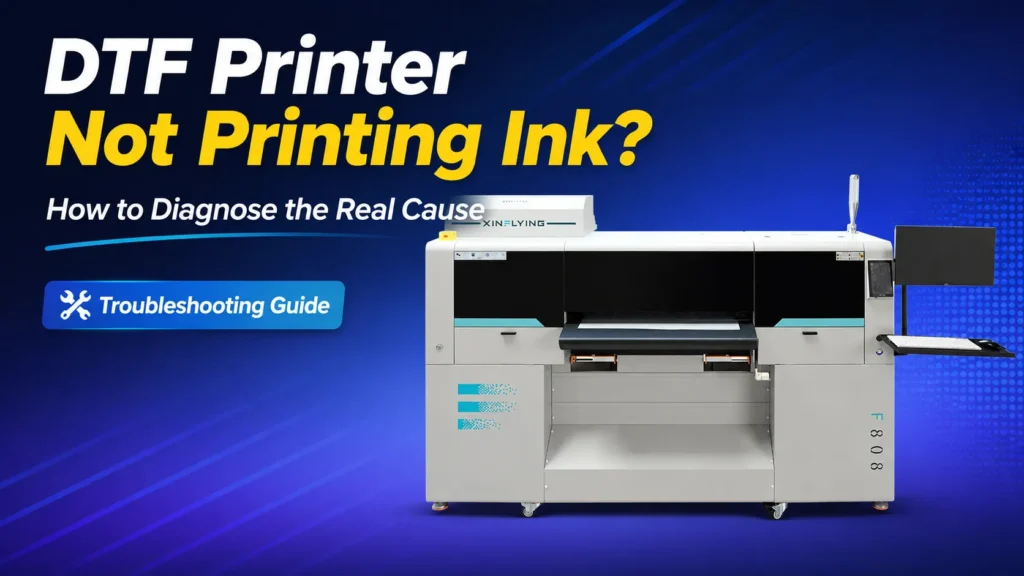
Линейка DTF-принтеров XINFLYING включает три уровня производства:
| Модель | Заявленная ширина печати | Заявленная скорость печати | Этап оценки |
|---|---|---|---|
| XF-450 Pro | До 420 мм | 5–9 м²/ч, в зависимости от режима проходов | Производство начального уровня |
| XF-702E | До 600 мм | 5–10 м²/ч, в зависимости от режима проходов | Коммерческое производство |
| XF-F808 | До 800 мм | 28 м²/ч в указанном 6-проходном режиме | Промышленное производство |
Это заявленные спецификации печати, а не гарантированный выход готовой продукции или прибыльность. Запросите конфигурацию под ваш макет, длину смены, ассортимент тканей, целевой объём и последующее оборудование.
Условия сервиса также входят в финансовое сравнение. Гарантийная и послепродажная политика XINFLYING описывает предотгрузочную проверку, стандартную ограниченную гарантию 12 месяцев для соответствующего оборудования, если иное не указано в письменных условиях, удалённую техподдержку и помощь с запчастями. Она также разъясняет исключения для расходников, изнашиваемых деталей, печатающих головок после установки и успешного тестирования, несовместимых материалов, ненадлежащего обслуживания и неподходящих условий эксплуатации.
Стройте решение на данных за 90 дней
До запроса коммерческого предложения на оборудование соберите:
- месячные расходы на трансферы на аутсорсе;
- сборы за доставку и срочность;
- площадь или количество купленных трансферов;
- выход годных при первой попытке;
- брак изделий и труд на переделки;
- средние и срочные сроки выполнения;
- заказы, отклонённые из-за слишком медленного оборота;
- ожидаемый рост производства;
- доступные часы оператора и рабочее пространство.
Используйте средний период, а не один аномально загруженный месяц. Затем запросите оценки оборудования, расходников, рабочего процесса и поддержки для того же уровня выхода.
Какой вариант выгоднее?
Аутсорс часто выгоднее при низком или непредсказуемом объёме, когда квалифицированный поставщик даёт надёжный результат. Покупка DTF-принтера может стать выгоднее, когда стабильный спрос держит рабочий процесс загруженным, а ценность контроля превышает полную стоимость владения.
Не сравнивайте общий счёт поставщика только со стоимостью чернил принтера. Сравнивайте пригодный выход, труд, потери качества, мощность, обслуживание и потребность в деньгах с обеих сторон.
Если у вас есть данные об объёме и затратах на трансферы за 90 дней, XINFLYING может помочь сопоставить их с конфигурацией начального, коммерческого или промышленного уровня и выявить допущения, требующие дальнейшей проверки.
Часто задаваемые вопросы
Только когда спрос, рабочее пространство, персонал и денежный поток поддерживают полный рабочий процесс. Малый бизнес с нерегулярными заказами может выиграть больше от аутсорса, пока объём не станет предсказуемым.
Сравните полные месячные затраты на аутсорс и собственное производство, рассчитайте положительную эксплуатационную экономию и оцените инвестиции с учётом денежного потока, финансирования, налогов, допущений о росте и риска. Простая окупаемость сама по себе — не полный анализ ROI.
Универсального объёма нет. Точка безубыточности зависит от стоимости годных на аутсорсе, переменной стоимости собственного производства, постоянных месячных затрат, труда, ассортимента продукции, утилизации и выхода годных.
DTF может дополнять трафаретную печать для полноцветных коротких тиражей, персонализации или образцов. Заменяет ли он конкретную трафаретную работу, зависит от количества, макета, ткани, требуемой отделки, труда и стоимости производства.